Now, this is something I’ve never attempted before; reviewing books. It’s probably the 2nd hardest thing to review aside from food, because there are so many factors that determine whether it’s effective or not, and I don’t really dig deep into the abysses of dictionaries and thesauruses to make myself look smarter than I am, so in advance, if any of this deems to be incoherent (I actually know that word, thank you very much), then I apologize. Here we go.
1531 Pages. Over 90 chapters. Hundreds of thousands of words. 3 Books. 1 Fantastic Story. The Millennium Trilogy (All written by the Late Great Steig Larsson) was an exhilarating, deep, and maniacal thriller that took me the course of 2 months to read (which is quite impressive by my standards). These books touched on issues that dealt with politics and the abuse of women. It also overshadowed the fact on how people view women in an everyday European society (of course a lot of things may have been exaggerated, but, I wouldn’t know). Most of the main figures portrayed in the books were strong, independent women who could do just as much, and even at times, BETTER, than the men could. It was good to see women take on the heroine position, whereas most are looked as the sidekicks or the more vulnerable figures. This is evident in some cases, but they showed brute strength (physical, mental & emotional) throughout, and it was a crazy ride the entire way.
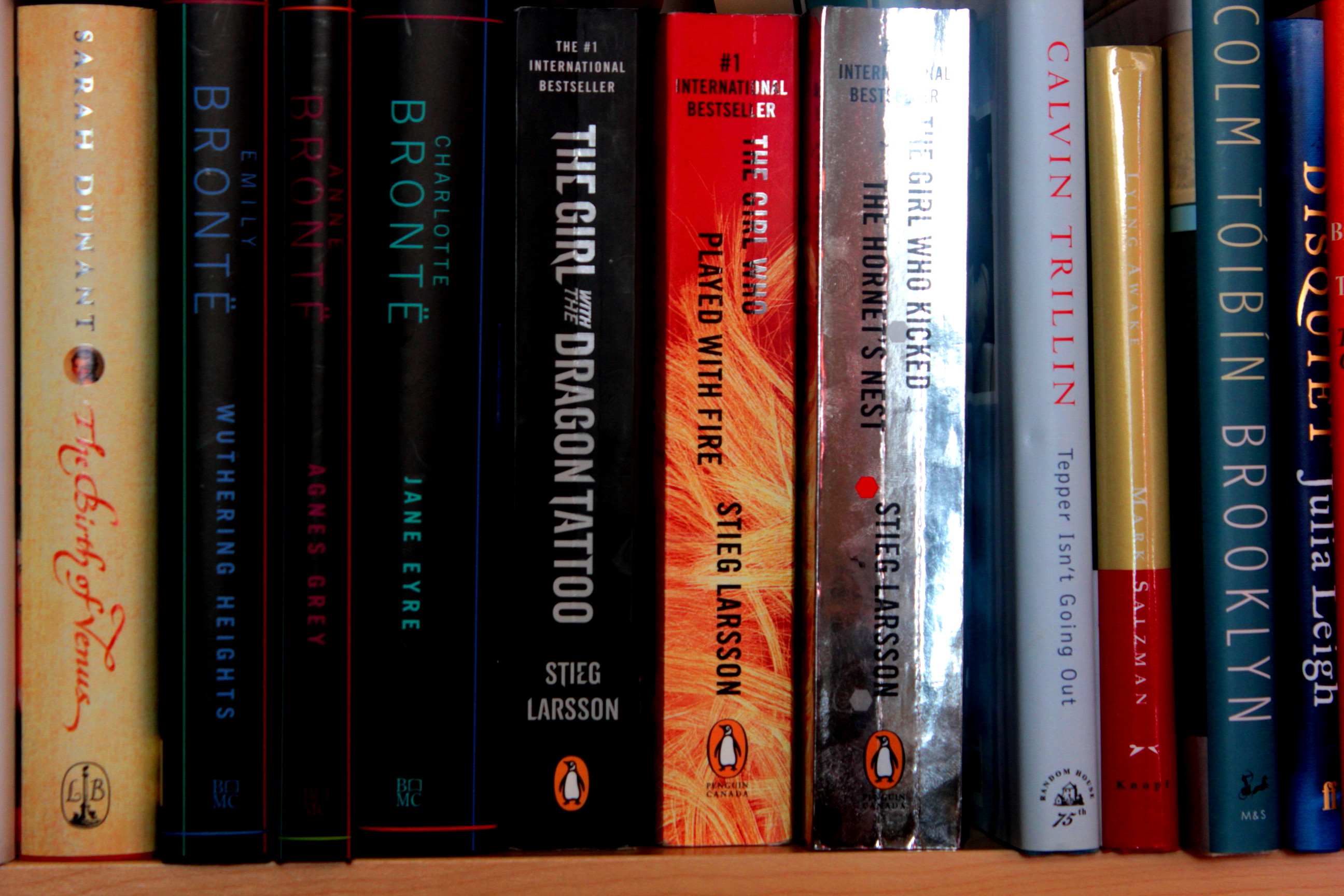
Given the fact that there were notable female figures highlighted throughout the Trilogy, there was one man who was the constant force that pretty much held it in place. Mikael Blomkvist, the famed journalist from Sweden, was like a modern-day Sherlock Holmes, the way that he was compared to in the books (his nickname Kalle Blomkvist pretty much pokes at his detective – styled manner while he investigated stories). He’s a man that’s very resourceful, a gentleman, and he was also a Ladies’ man; I constantly referred to him as a gyallis (GE-YAL-IS) while I was reading these books because of the fact that we was sleeping with at least 5 of the women during the course of this trilogy. He’s a natural when it comes to getting women, but it’s never slowed him down from his work, which I respected because the women understood who he was, and what he did, so he was just slinging around left and right as he pleased, and there wasn’t a problem in the world with that. Aside from him being a man who loved the ladies, he was constantly on a mission. After a rough start in The Girl With The Dragon Tattoo, he was summoned to solve a 40-year-old mystery that seemed somewhat impossible. It was his reputation that had landed him that position, and he was a trusting person, but if you cross him, that’ll be your ass, and he definitely let you know about it. He definitely wasn’t afraid of getting himself into sticky situations, because that’s what journalism is all about, and what I’ve learned through reading these books. There’s always a story out there waiting to be uncovered and unfolded for the world to see, but how much are you willing to unfold it, and can you handle the obstacles and challenges that come with it? Such was the common theme in the books – always a challenge. Always a mystery. It was like a constant guessing game, but it didn’t leave me scratching my head at all times.
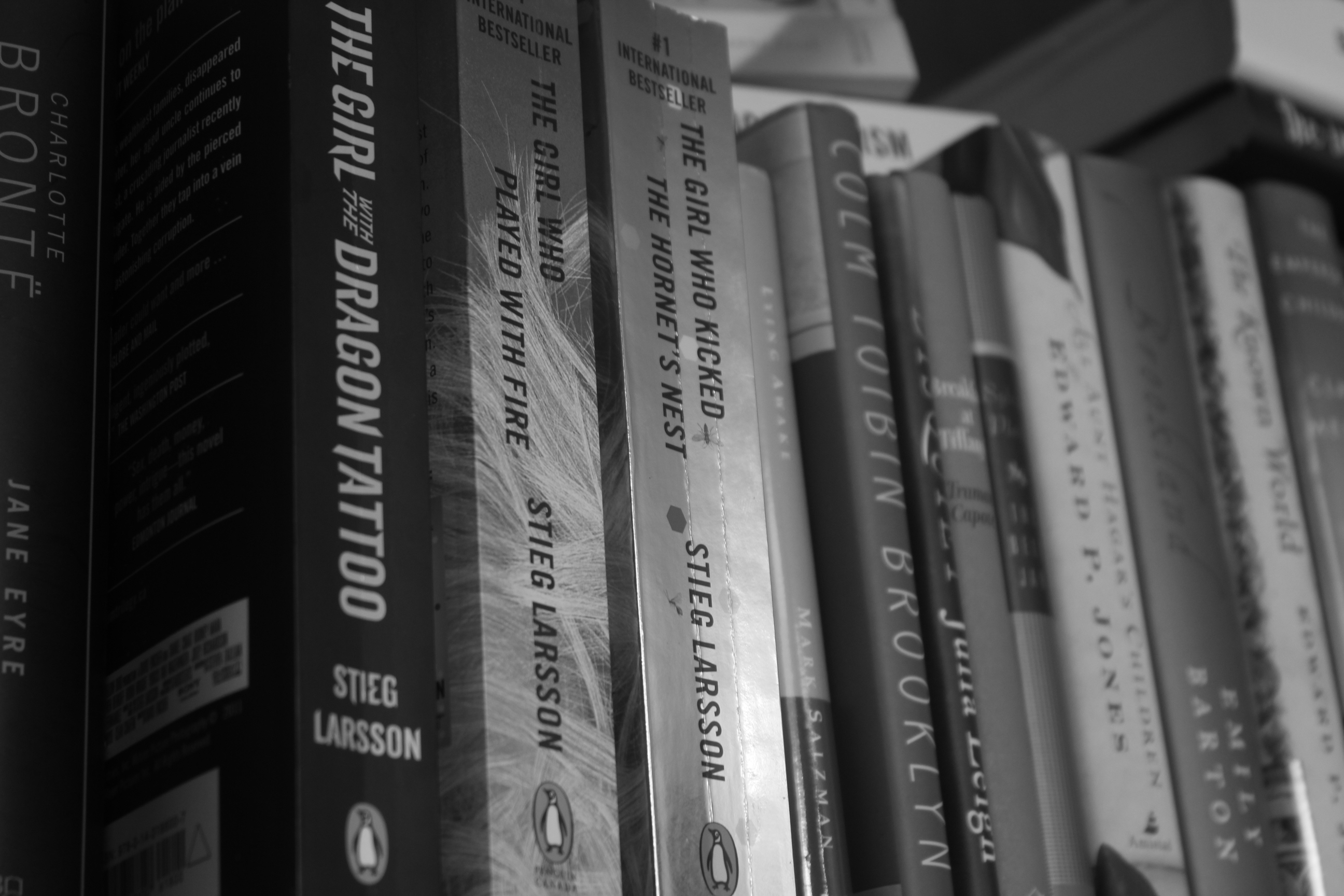
No one can do it alone. Well, you could, but it would be much more difficult, although there are some advantages to going solo: no one to slow you down, you control your own time, there’s the freedom of not having someone down your back. But there are disadvantages as well: if you’re stuck and you need help, you don’t have anyone to call, you’re less effective if you come across a physical confrontation, and as much as you have 1 great brain, sometimes having another is better. Those are just SOME of the factors, but when it came to having a partner, and an effective weapon to your advantage, Lisbeth Salander is the perfect person.
Lisbeth really is the entire series. There’s no series if Lisbeth Salander doesn’t live or doesn’t have an effective role in some way. She’s like Jason Bourne with her intelligence and resourcefulness, and like Bourne (a series of books that I haven’t read *shakes my head*), her mind was always working. There was always an objective, and she was just a brilliant mind of her own (could you imagine them as a couple? Mr. & Mrs. Smith WHO?!). Everyone has a story. Everyone has a past that they’re not proud of, or they choose not to remember. Some people may have actually enjoyed their lives as they’ve lived them, but others are not so lucky to be as fortunate. Lisbeth has a terrible past, but trying to escape it has been a nightmare. She continued to live in a paranormal state before she teamed up with Blomkvist, and if it had not been for their lives crossing paths, who knows what would have happened with her. Joan of Arc was a woman who died fighting for the French, which was looked at as a weak army, but she had the heart of a lion, and the soul of a champion. Many feared her, and she was only a teenager (so ya, you women who are out there complaining about a broken nail, try fighting a war at 18-19 years old then talk). Lisbeth Salander was like Joan of Arc

but in a pint-sized, punk rock, more technologically savvy kind of way. She could use weapons that were around her with no issue, but her main firepower was the power of computers (Thank you Bill Gates & Steve Jobs). Being a hacker takes some serious brainpower, and that’s power that I lack and is nowhere close to what she was able to do during this series. From the hacking of a billionaire’s accounts and transferring them as her own money, to copying a hard drive from a secure network so she can see everything that you’re doing at real-time? Yes, this was major. There wasn’t anything that she couldn’t do (unless she was getting buried alive or getting shot by her father, but I won’t spoil anything).
The chemistry between Blomkvist & Salander was a classic tale of a love (strong word) and hate relationship (if you could call it that). They fed off of each other, and their similarities when it came down to their meticulous attention to detail really made it exciting, because they gathered all information and combed through it so that there could be no room for error, and when either one was in a predicament, they would help each other out and still be progressive in their mission at hand. It made the book flow, it built their character development, and it made you want to read more to get to know what their estranged friendship was like. The sarcastic conversations back and forth, the cryptic messages, not talking to each other for weeks on end because of sheer dislike (which Salander did often), it was one that you just couldn’t help but to be fascinated with, and the great thing was that through it all, no matter how they felt about each other, they still had respect for each other, because of what they had gone through together, and they were always looking out for each other. I loved that, and it was cool to read about it because you sort of look at your life and the people in your circle and wonder about those you call your friends that you can randomly say “hey” after no communication for a long time, but it still feels like you’ve never left.
“There’s a saying about wealth, there’s a saying about fortunes, and the saying is, ‘Behind every great fortune there’s a great crime.'” – Chris Rock – Never Scared
The way that this quote was so relevant throughout these books was astounding. The first book revealed a Billionaire by the name of Hans-Erik Wennerström, and Micke (the short form of Mikael that was often used in the trilogies) was convicted of trying to prove that he was a crook, but turned out unsuccessful and had to suffer for that (financially, not physically). As the story continued on and more pieces were being filed into place, Micke (with the bountiful help of Lisbeth and her band of merry men) eventually exposed the truth about him, and what better way to expose the truth than to write a book about your corrupt ways? That’s what Mikael did best – write, and you could never undermine the true power of the written word (and I’m not talking about the Bible, folks, although it was referred to heavily in the first book. Very gruesome details).
The Government. Lord, how I dislike that word because of the amount of corrupt figures that form it. It’s evident that there’s always something going on that the people, who just happened to voted their punk asses in, fail to know about. There’s always a backdoor scheme, a dark alleyway secrecy that we will never know, but there are the people who work nonstop to uncover the truth about what’s really going on. A lot of the government toiling displayed in these books deal with one man who is the sole reason why he’s such a focus in books 2 & 3 (they’re pretty much the same book divided in 2). Zala. If you read the books (which after reading this, you will), you’ll understand why this one man is the main reason why the story exploded in the first place. Kanye West really meant it when he said “No one man should have all that power,” because for real, too much power could be a bad thing and you can end up shooting yourself (foreshadowing) in the foot because you have so many people who you’re in charge of. This one man has people in the every level of the government on the palm of his hand, and of course it has to be Mikael that has to be in the mix of all this. Story of his life, and the life of this story. It’s how everything was unfolded that is the most interesting part about reading these books.
The series really gets more and more interesting about 100 pages into the first book and then it basically takes a mind of its own through the rest of them. Sometimes, I found that I had to re-read certain pages because things were moving fast, and I had to make sure that I was staying on track. Reading isn’t just about your eyes moving on a page and just flipping them, it’s about comprehending and focusing on what the main issues were and paying attention to the story and how it was moving along. There were a lot of political issues that dealt not only in Sweden (where the series is primarily based), but it involved countries in the surrounding areas that also played a factor in it. Espionage, scandal, trafficking, sexual predators, you can name it all, because there were a lot of crazy happenings during all of this, but it just made me think about if even some of this stuff was going on in Canada or even other areas, and these books are just examples of what’s happening. Who knows.
The only reason why I started to rad these books was because I watched The Girl With The Dragon Tattoo in theatres and I instantly fell in love with it. I had to read them, no discussion. Daniel Craig & Rooney Mara were great in the film, and to be honest I visualized them while reading the books and it made it much more interesting when you could already see the faces of the main characters as you read the pages of the lengthy books. It also made me want to travel to Sweden, because for one, I could barely pronounce all of the street names and words that were in Swedish, and in the movies (I watched the Swedish versions of the films), it looks like a lovely place to visit, so why not? But back to the books.
Erika Berger & Annika Gianni have one thing in common. Mikael. Lover & Sister, respectively, have both had big roles in the books (Annika more in the 3rd book than anything else) based on their situations. Erika’s the editor-in-chief of the Millennium magazine (which the Trilogy’s name is based upon because they’re the main focus surrounding the big issues that are talked about), and she was a driving force when it came to the exposés that occurred. Her role got her a big promotion to a bigger, much powerful position, but that was abused to the point where it was decaying her life. Annika is a lawyer that was a major factor in the 3rd book (you have to read it. The last couple of chapters were CRAZY), because of her representation of Lisbeth Salander in a major case. I’m not going to spoil a lot, but the way that everything tied together and the dramatic effect that it had, it literally had me reading from 12am to 3am with no issues. It just further instilled the power that the women had in these books, and the main woman was Salander.
There were a lot of things that I took away from these books that I just may use in everyday life: To always work hard for something you love because no amount of money can truly take away that love you have for something that you desire to hold close to you. To value the people who you have in your life right now, because there won’t be so many people who will come to your aid when you need it. The most UNLIKELY people who show up in your life can make an everlasting impression on you, so to judge one by their covers wouldn’t be the best suggestion because they just may be the best friend you’ll ever have.
I enjoyed reading these books for leisure, and also for education, and it’s really the first series of books that I’ve finished since the good ol days of A Series of Unfortunate Events by Lemony Snicket. This series is purely unadulterated, no holds bar, raw and rugged, smart and introspective, cringing and intriguing, and any other set of adjectives that you can come up with to describe it. The series hasn’t sold hundreds of millions of copies worldwide for no reason. This is a great series for anyone to read and to lose yourself in the mind of some brilliant figures who are simply just everyday people with extraordinary gifts of finding behind the lies. So, I highly recommend to anyone to read this series, given the fact that it’s a bit long, I know that I’m not the fastest reader, but I’m getting better. It’s a good one, so I wouldn’t miss out. There’s a lot of info that I left out for a reason so you can pick up the books to read them, because I know you’ll enjoy it. BUT, for now, until the next series (most likely The Hunger Games)
That’s My Word & It STiXX


 THE.STiXXclusive.BLOG